BY : Samantha Kamman, Christian Post Reporter
WASHINGTON — A radical Fulani tribe that advocates say is “hell-bent on turning Nigeria into a caliphate” is abducting and holding Christians in chains while the Nigerian government and media turn a blind eye, according to journalists sounding an alarm about religious and ethnic tensions.
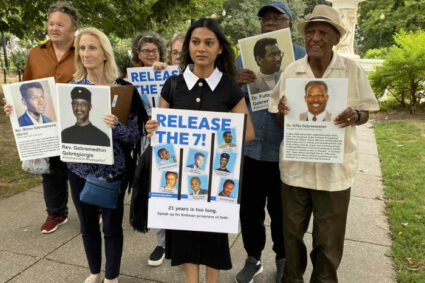
Douglas Burton, a former U.S. State Department official and now senior editor of Truth Nigeria, a project of Equipping The Persecuted, shared details of the organization’s reporting during a Wednesday Capitol Hill press conference on the terror camps within a forest behind Rijana village in the northwestern Kaduna state.
Based on interviews with survivors, Truth Nigeria has reported that there are at least 11 major camps in the vast forest south of Kaduna, and each one reportedly holds more than 50 captives.
“So there’s approximately 500 or 600 people in the forest now, and they have maintained these hostage camps there since December of last year,” Burton said. “So thousands of people have gone through this system, and many were killed.”
Survivors of the terror camps who have recounted their experiences in interviews with Truth Nigeria have said that their captors barely fed them and beat them regularly. Hostages in the camp are often killed if their families cannot afford to pay a ransom.
One survivor, a mother named Esther, said Fulani terrorists abducted her and her 10-month-old daughter, Anita, from their home in Gaude village in June 2025. The terrorists marched Esther and several others they had kidnapped into the Rijana enclave, where they held their captives in an assortment of camps.
During her time in captivity, Esther said that the kidnappers warned her against reciting any Christian prayers. But the mother stated that prayer was one of the few consolations as a hostage, where she witnessed the execution of two people whose parents failed to pay a ransom.
Once, when the mother’s baby cried, one of the terrorists snatched the baby from Esther, covering the child’s nose and mouth before Esther managed to wrestle the baby back.
After enduring months as a hostage, Esther was released on Aug. 27, according to Truth Nigeria. The former captive said that despite her kidnappers forbidding it, she prayed that she would one day be released from the terror camp.
At the press conference, several faith and nonprofit leaders also raised concerns about what they say is the Nigerian government’s failure to protect Christians, as well as some Muslims, from violent Fulani terrorists. In addition to mass killings, they say many face the threat of being abducted and held for ransom.
“The kidnappers are Fulani,” Judd Saul, executive director of Equipping The Persecuted, emphasized during the press conference on Wednesday.
“They are part of the Fulani ethnic militia. The people that are doing the killing, the kidnapping, and taking over Christian communities are the Fulani ethnic militia. This is a jihadist Muslim tribe that is hell-bent on turning Nigeria into a caliphate.”
Numbering in the tens of millions, the Fulani people group is one of the largest nomadic ethnic groups with tribes dispersed across the Sahel and West African countries. Predominantly Muslim, Fulani comprise hundreds of clans, and many different lineages do not hold extremist views.
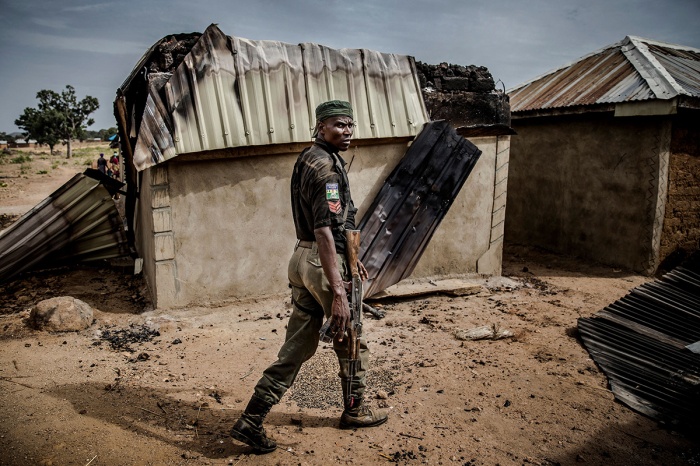
However, advocates have warned that some Fulani adhere to extremist ideology that has resulted in more violence impacting and displacing predominantly Christian farming communities in the Middle Belt of Nigeria in the last several years, leading to thousands of deaths.
While some activists have warned for years that the level of violence has reached the standard for genocide, the Nigerian government has claimed that the violence is not religious in nature and is simply farmer-herder clashes exacerbated by other factors.
While experts debate the role religion plays in the conflict, the U.S. Commission on International Religious Freedom has raised concern that “violence by and against Fulani groups is clearly aggravating religious tensions” in countries like Nigeria.
Photo Courtesy :