

BY : Ryan Foley, Christian Post Reporter
A bipartisan federal government watchdog entity has recommended that the U.S. State Department designate more than a dozen countries as “countries of particular concern,” including Syria and Libya, as a key post overseeing the government’s monitoring of international religious freedom remains unfilled.
The U.S. Commission on International Religious Freedom released its 2026 Annual Report on Wednesday. The annual report, mandated by the International Religious Freedom Act of 1998, provides recommendations to the U.S. federal government on protecting religious freedom worldwide as it pursues its diplomatic goals.
The report labels Afghanistan, Burma, China, Cuba, Eritrea, India, Iran, Libya, Nicaragua, Nigeria, North Korea, Pakistan, Russia, Saudi Arabia, Syria, Tajikistan, Turkmenistan and Vietnam as CPCs for engaging in or tolerating “particularly severe” violations of religious freedom, the highest tier reserved for the world’s worst violators.
All but two of the countries recommended for designation as CPCs were also included in USCIRF’s recommendations in its 2025 Annual Report, with Libya and Syria as new additions.
In Libya, USCIRF warns of a “downward” spiral of religious freedom conditions, specifically the sentencing of 10 Christians and one atheist to prison terms ranging from three to 15 years because of their embrace of religious beliefs at odds with those preferred by the government.
The detainees have reportedly faced “torture, including beatings and psychological abuse” behind bars.
Additional developments in Libya include the prosecution of a social media user for criticizing the nation’s religious institutions, USCIRF warned.
“Across the country, minority religious communities continued to face ongoing persecution at the hands of government authorities, including harassment, arbitrary detention, and societal discrimination against foreign and local Christians, disfavored Muslim groups (including Sufis and Ibadis), and suspected converts from Islam,” the annual report states.
In Syria, USCIRF warns that religious freedom conditions in the war-torn country “dramatically deteriorated” in 2025. The report cited the transitional government’s failure to “prevent, curb, or adequately administer justice for multiple mass killings, kidnappings, and other egregious acts of violence against Alawis, Druze, Christians, and other religious minorities.” USCIRF pointed to the March 2025 mass killing of more than 1,500 Alawites in response to transitional authorities’ “general mobilization calls.”
“Militants conducted mass door-to-door executions of Alawi civilians in Tartus, Latakia, and Hama, deploying religious slurs such as ‘Alawi Nusayri pigs’ against their victims and killing at least 1,500 people in the first two days,” the report reads. “In April, armed actors reacted violently to false social media reports that a Druze leader had insulted the [Islamic] Prophet Muhammad, firing on Druze residents in the Damascus suburb of Jaramana and kicking off several days of fatal clashes.”
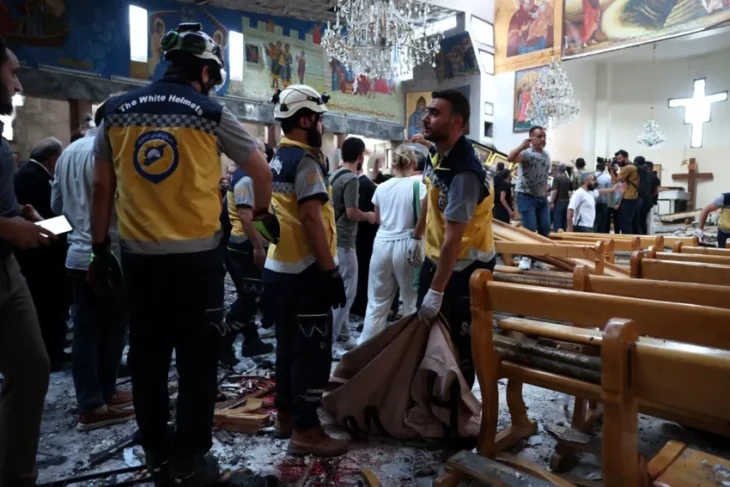
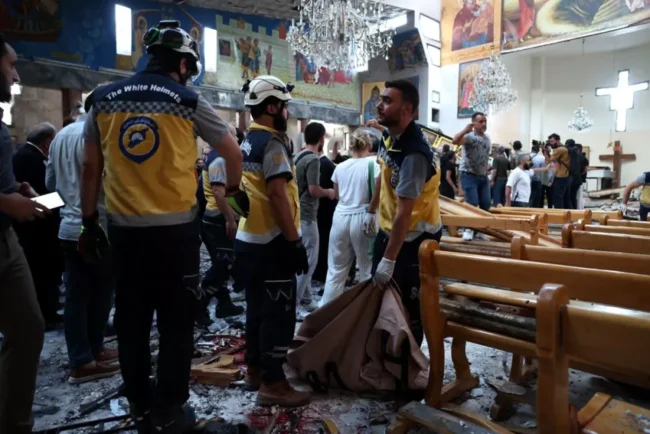
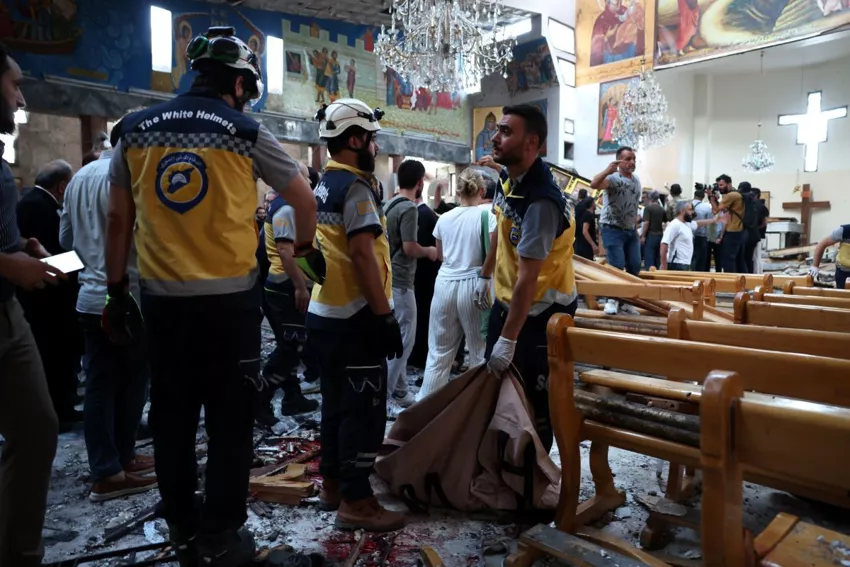
Last June, a suspected suicide bomber attacked the Mar Elias Antiochian/Greek Orthodox Church in Damascus, where at least 25 Christians were killed during a Sunday liturgy.
“Despite transitional authorities’ obligations to administer justice against the perpetrators of these and other atrocities, official accountability processes suffered from slowness, lack of transparency, or inadequate or no punishment for the perpetrators,” USCIRF researchers state.
The commission recommends the State Department include Algeria, Azerbaijan, Egypt, Indonesia, Iraq, Kazakhstan, Kyrgyzstan, Malaysia, Qatar, Turkey and Uzbekistan on its “Special Watch List” for countries that engage in or tolerate “severe” violations of religious freedom, a second-tier ranking.
As noted throughout the report, the State Department has not issued CPC or SWL designations since 2023. The failure to make the designations comes after the U.S. Senate failed to confirm Mark Walker, Trump’s nominee to serve as U.S. ambassador-at-large for international religious freedom, leaving the post without a permanent appointee more than a year into his term. After Walker’s nomination expired at the start of the new year, Walker was appointed in January to a religious freedom advisory role at the State Department that doesn’t require Senate confirmation.
During the last round of State Department designations, the department did not include Afghanistan, India or Vietnam on the list of CPCs, and did not include Egypt, Indonesia, Iraq, Kazakhstan, Kyrgyzstan, Malaysia, Qatar, Turkey or Uzbekistan on the SWL.
President Donald Trump announced on Oct. 31, 2025, that he was designating Nigeria as a CPC after the Biden administration repeatedly left the African nation off the CPC list.
As for entities of particular concern, a label reserved for non-state actors who engage in “systematic, ongoing, and egregious violations of religious freedom,” USCIRF recommended that the State Department designate al-Shabaab, Boko Haram, the Islamic State in Sehel, the Islamic State in West Africa, Jama’at Nasr al-Islam wal Muslimin, Rapid Support Forces and the Houthis as EPCs.
With the exception of the Rapid Support Forces in Sudan, all the non-state actors recommended for designation as EPCs were included on the State Department’s list in 2023, along with the Syrian terror group Hay’at Tahrir al-Sham and the Taliban in Afghanistan.
USCIRF consists of commissioners appointed by the president and leaders of the U.S. Senate and House of Representatives. USCIRF commissioners issued statements in response to the annual report’s release.
“China arrests underground church members, mob violence is on the rise in India and Pakistan, leading to attacks on religious minorities and the destruction of their homes, Burma’s military bombs houses of worship, and Tajikistan denies parents the right to teach their children about faith,” said USCIRF Chair Vicky Hartzler, a Republican former member of Congress.
“As USCIRF’s Annual Report shows, far too many people in key nations are denied religious freedom through unjust laws, discrimination, harassment, violence, and even crimes against humanity,” she added. “The U.S. government must continue to advance religious freedom abroad to make a difference for those facing religious persecution.”
USCIRF Vice Chair Asif Mahmood notes that government repression and non-state actor violence “are on the rise in many places around the world,” saying such acts are “often devastating targeted religious communities and taking innocent lives.”
Mahmood urged the State Department “to issue its Annual Report on International Religious Freedom and make its designations for countries and entities that violate this fundamental freedom to keep it at the forefront of U.S. foreign policy.”
Photo Courtesy :