
BY : Obianuju Mbah Christian Today
Christians remain the most persecuted religious group globally, the Holy See’s representative to the United Nations in Geneva has warned, urging governments to strengthen protections for freedom of religion.
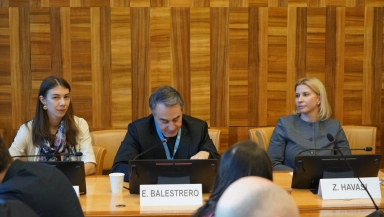
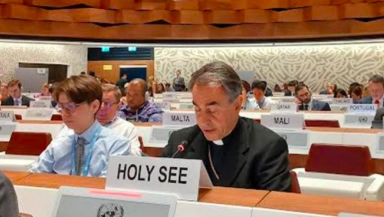
Speaking at an event titled “Standing with Persecuted Christians: Defending the Faith and Christian Values” on March 3, Archbishop Ettore Balestrero, the Holy See’s Permanent Observer to the United Nations, said hundreds of millions of Christians suffer some form of repression because of their faith.
“Almost 400 million Christians worldwide face persecution or violence, making them the most persecuted religious community in the world” he said. “This means that one in seven Christians is affected.”
He added that the human cost of this persecution remains severe. According to figures cited during his remarks, nearly 5,000 Christians were massacred on account of their faith in 2025, an average of around 13 deaths each day.
The Archbishop said those killed because of their beliefs are considered martyrs within the Christian tradition – witnesses whose lives testify to their faith. From the standpoint of international law, however, he stressed they are victims of grave human rights abuses.
He warned that responsibility ultimately lies with governments to ensure the safety and rights of religious believers.
“It is the State’s duty to protect freedom of religion or belief,” he said, stressing that authorities must prevent attacks against believers and ensure accountability for violations.
Archbishop Balestrero went on to say that freedom of religion is a fundamental human right recognised in international law. Governments, he said, must not only defend believers from violence but also avoid restricting their freedom to practise their faith publicly or privately, reports Vatican Media.
He warned that impunity for crimes against religious communities persists among the gravest global challenges in addressing persecution.
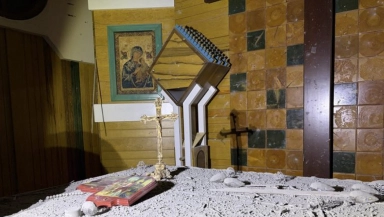
Christians in many parts of the world, he noted, continue to face violence, imprisonment, seizure of their property, forced displacement, and other abuses because of their beliefs.
The Archbishop also pointed to forms of discrimination that are less visible but still significant, including social marginalisation, exclusion from certain professions, and legal restrictions that quietly limit the ability of Christians to express or live out their faith.
Even in parts of Europe, he said, hostility toward Christians resulted in more than 760 anti-Christian attacks on churches, acts of vandalism and physical assaults in 2024 alone.
Recent research supports the scale of the problem.
The Open Doors World Watch List 2026 estimates that 388 million Christians now experience severe persecution and discrimination worldwide, a rise of 8 million compared with the previous year.
The report identifies North Korea as the most dangerous country in the world to be a Christian, where practising the faith can lead to imprisonment in labour camps or execution.
However, Nigeria remains the deadliest country for Christians, responsible for 70% of the nearly 4,900 Christians who lost their lives because of their faith during the reporting period.
The report also highlights widespread violence and instability across parts of sub-Saharan Africa such as Sudan and Mali, as well as increasing pressure on Christian communities in the Middle East and parts of Asia like Yemen and Syria.
Archbishop Balestrero warned that in some Western societies, freedom of religion is increasingly challenged by legal and cultural pressures that limit the public expression of Christian beliefs.
Citing recent cases documented by the Observatory on Intolerance and Discrimination against Christians in Europe, he pointed to 2,211 recorded incidents in 2024 involving legal action against individuals for activities such as silent prayer close to abortion clinics or publicly referencing biblical passages on social matters.
He said such situations raise serious concerns about the protection of religious freedom and called on governments to uphold their obligation to respect and defend the rights of all believers.
Concluding his address, the Archbishop described attacks on Christians as attacks on the deeper spiritual and social values symbolised by the Christian cross – both humanity’s relationship with God and the bonds between people within society.
Safeguarding freedom of religion, he said, is essential not only for protecting believers “to respond freely to the call of truth,” but also for preserving human dignity and social harmony.
Photo Courtesy :