BY : Anugrah Kumar, Christian Post Contributor
Chinese authorities are intensifying pressure on lawyers defending jailed leaders of Beijing’s Zion Church, a prominent Protestant house church whose founder, Pastor Ezra Jin, was detained five months ago in a crackdown that drew calls from Washington for his release.
Authorities revoked the legal license of Zhang Kai, a lawyer involved in the case, The Wall Street Journal reported Friday, saying several other lawyers connected to Zion’s defense also had their licenses suspended or received verbal warnings in meetings with officials.
Representatives of the church said in a letter that the treatment of the lawyers amounted to a trampling of justice and the rule of law.
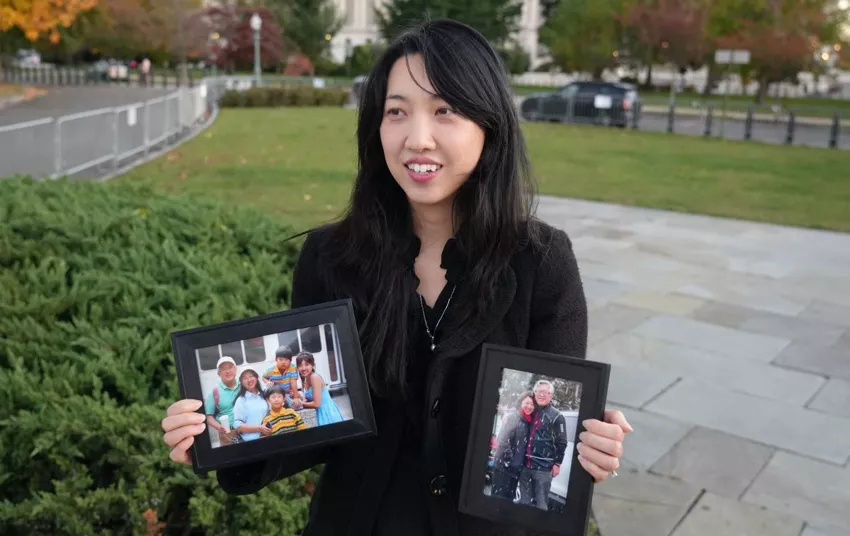
Grace Jin, the pastor’s daughter, was quoted as saying that the pressure on lawyers could make it harder for the family to learn about his condition and build a legal defense.
Jin, also known as Jin Mingri, was detained at his home in Beihai, Guangxi Province, in October 2025. Around the same time, nearly 30 Zion Church leaders and members were either arrested or reported missing in several cities, including Beijing, Shanghai and Shenzhen.
Eighteen people, including Jin, are currently being held in a detention center in Beihai in southern China, WSJ reported.
The pressure on lawyers has deepened concern about a case that already carries diplomatic and religious significance.
Jin’s family has close ties to the United States. His daughter lives in the Washington area and works as a U.S. Senate staffer. His wife, Chunli Liu, has lived in the United States since 2018 with the couple’s three children, all of whom are American citizens.
U.S. Secretary of State Marco Rubio has called for Jin’s release, and members of Congress have done the same.
Rubio said the crackdown shows hostility by the Chinese Communist Party toward Christians who reject party interference in their faith and worship in unregistered churches. He urged Beijing to allow people of all faiths to worship without fear of retribution.
Jin, 56, founded Zion Church in 2007 after studying at Fuller Theological Seminary in California. He converted to Christianity after the 1989 Tiananmen Square protests, in which he took part, and became one of the best-known leaders in China’s house church movement.
Zion grew into one of China’s largest underground Protestant churches.
After authorities raided its Beijing sanctuary and shut the church in 2018, it moved services online and built smaller branches around the country. Its virtual services often drew as many as 10,000 participants on Zoom, YouTube and WeChat.
The online growth increased official scrutiny.
Xi Jinping’s government has tightened control over civil society and religious practice since he took power in 2012.
The Chinese Constitution promises freedom of religion, but the Communist Party recognizes only state-approved religious bodies. For Protestants, it is the Three-Self Patriotic Movement, and for Catholics, the Chinese Patriotic Catholic Association. Even the “approved” groups operate under surveillance, censorship and political control.
Tens of millions of Christians in China are believed to attend house churches, which often face police harassment because they operate without government registration.
Chinese authorities have also branded some unofficial religious groups as cults and have urged citizens to report them.
Church leaders fear Jin could face charges tied to the online dissemination of religious content, an allegation linked to regulations issued last September requiring religious activity to take place only through state-registered channels.
Grace Jin said her father had been under constant surveillance and barred from leaving China while continuing to lead the church remotely.
She also said that, before his detention, he tried to visit the U.S. Embassy in Beijing to renew his visa, but authorities intercepted him, drove him to the airport and forced him to leave the capital.
After his detention, the family lost contact with him, and it remains unclear whether he has been formally charged.
Photo Courtesy :