Churches must disciple well and listen well in response to rise of Christian nationalism

BY : Staff Writer Christian Today
Churches have a task on their hands to raise standards of theological literacy in their congregations amid growing Christian nationalism, while at the same time listening to and engaging with the concerns of people in their flock.
That was the message that came out of a webinar hosted by the Evangelical Alliance on Christian nationalism and the rise of far right and populist movements in the UK, some of which have found a degree of support among Christians.
The webinar was joined by Rev Dr Helen Paynter, founder and director of the Centre for the Study of Bible and Violence at Bristol Baptist College, who said that some of the Christian language and imagery being used at recent nationalist rallies was “problematic”. As examples she cited talk of a “religious war” and calls to ban all other religions except Christianity.
She described such rhetoric as “thin theology”, where Christian slogans and images are used without any real depth.
However, she drew a clear distinction between two groups of people. On the one hand there are those who may be patriotic, concerned about Islam and immigration, and even harbour a desire for a ‘Christian nation’.
On the other are those with ideological perspectives characterised by “punitive and hostile” attitudes towards immigrants, hate speech or violence, racism, a conflation of ‘Christian’ with ‘English/British’ and ‘white’, anti-Muslim rhetoric, and a suppression of religious freedom.
Dr Paynter said there was a risk of the Church “vilifying and pushing” people in the first group into far right movements, unless it listens well to their views and does not simply dismiss them as extreme or unacceptable.
“Let’s not call each other names. Let’s listen to one another graciously,” she said.
Dr Paynter said she was troubled by the name calling she was seeing even among Christians, and called on the Church to model a better way.
“If we can bring something to our culture in addition to the saving news of Jesus Christ, how about learning to disagree well and learning to listen to one another and maybe thinking about taking the plank out of our own eye first,” she said.
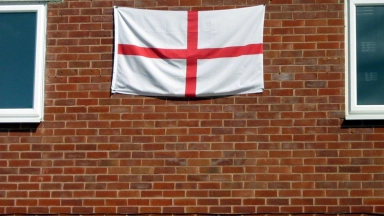
Asked for her views on “healthy patriotism”, she said, “I would love to see the flag reclaimed in really positive ways and I think the Church can be involved in that in community.
“There’s so much we can celebrate about being English and British. It’s about doing it in ways that aren’t narrow – ethnically narrow or religiously narrow.”
She added, “There are lots of ways we can do it but let’s just be aware of the risks involved and be attentive to the possibilities of doing it badly.”
Noting that more recent nationalist rallies have had lower turnouts, Paynter said it remained to be seen if the movement has already peaked, while adding it was possible that some within it have already become a “little bit bored” with Christianity or have perhaps not found it as useful as they thought it would be.
“However I think that within the churches, this is not yet going away,” she said.
“The expression of it is less extreme than Tommy Robinson but it is still concerning in my view because I’m hearing a lot of people in the churches express opinions that would definitely fall at times beyond [what is acceptable] in terms of accepting difference of opinion.”
Dr Paynter called on churches to “help Christians smell a rat” by deepening theological literacy within their flocks.
She also said that there were missional and apologetic implications that the Church needs to respond to.
“There is an instinct sometimes to respond to volume with volume, and force with force,” she said.
“Jesus teaches that the Kingdom grows like yeast, and I would say that getting on with the quiet grassroots work of loving our neighbours and sharing the Gospel with them is probably the most important thing we can do right now.”
Although public engagement is needed, she said the first priority for local churches remains sharing and living out the Gospel.
“There is an anxiety around this moment which I want to encourage us not to lean into. We need to be attentive and wise to it but let’s not be anxious that the Church is under threat … Let’s just get on with the good, faithful stuff that we’re doing – and continue to do it better,” she said.
Also joining the webinar was the Evangelical Alliance’s head of advocacy, Danny Webster, who said that one of the aspects of Christian nationalism in the UK he found “problematic” was its tendency towards being “anti-democratic” and wanting to restrict religious freedom for people of other faiths.
With large numbers of Brits, including Christians, holding such views and joining marches or at least being sympathetic to them, he said it was important not to ignore them but engage with them.
“The Church has to do a lot more in terms of hearing and engaging, particularly with working class communities,” he said.
“It is important that we recognise the sincerity and the realness of the concerns people are raising.”
While there could be an opportunity to preach the Gospel at such marches, he said there was also “a risk that the Gospel we are preaching is entwined too much with the politics of that movement”.
“I would love people on the marches to come to know Jesus but are they coming to know Jesus because of Jesus or because it’s being aligned to particular political movements? That is where we need to have some care – and I say that in terms of any political context … with any movement we need to be careful that we don’t align our faith and the Gospel with particular political movements or ideologies.”
Photo Courtesy :