


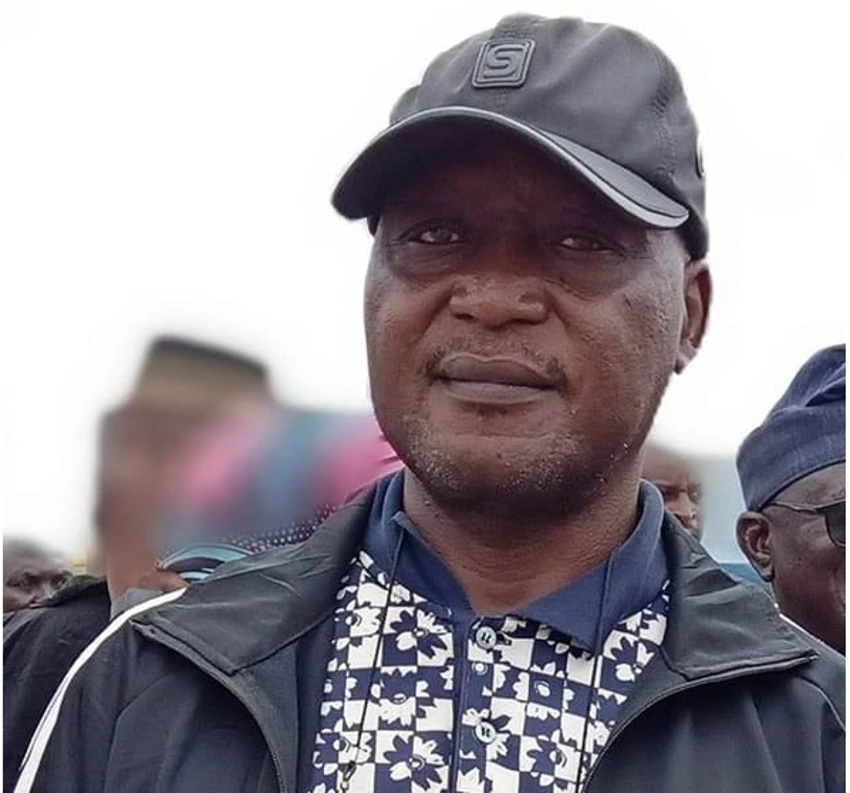
BY : Ryan Foley, Christian Post Reporter
A Nigerian journalist has been cleared of criminal defamation charges for reporting on violence against Christians in the country, ending a years-long legal battle.
ADF International, the global arm of the nonprofit legal group Alliance Defending Freedom (ADF), announced the outcome in a statement Thursday. Luka Binniyat was arrested in November 2021 after writing an article for The Epoch Times titled “In Nigeria, Police Decry Massacres as ‘Wicked’ But Make No Arrests,” which focused on religious violence in Nigeria’s Middle Belt states, including Kaduna.
In the article, Binniyat quoted Nigerian Sen. Danjuma Laah, who objected to the way Samuel Aruwan, Kaduna’s commissioner of internal security and home affairs, described an attack on Christian farmers in the state as a “clash.” The lawmaker accused the Kaduna government of using “Samuel Aruwan, a Christian, to cause confusion to cover up the genocide going on in Christian Southern Kaduna by describing the measure as a ‘clash’” rather than a targeted act of violence against Christians.
Binniyat was initially charged with cyberstalking Aruwan. He was released in January 2022 after 84 days in custody, but his legal battle continued.
In May, more than four years after the arrest, the Federal High Court in Kaduna published its ruling. The court found “no evidence to prove the essential elements of the alleged offense” and called the evidence against Binniyat “manifestly unreliable.”
“I am grateful that I was released and the charges against me were dismissed,” Binniyat said. “However, my experience shows that there is much work to be done in Nigeria regarding protecting free expression, especially when it comes to speaking out on religious freedom and reporting honestly about what is really happening to Christians in the country.”
Binniyat said it is “troubling” that he was arrested for his work as a journalist reporting facts.
“It is essential that as Christians face widespread persecution throughout Nigeria, the press is free to quote what public figures are saying and doing about this crisis,” he stated.
Sean Nelson, ADF’s senior counsel for global religious freedom, said Binniyat did nothing more than “accurately quote a Nigerian legislator’s own words.”
“This ruling is a vindication for Luka, but it should also be a wake-up call: accurate reporting on atrocities is not a crime, and journalists covering religious persecution deserve protection, not prosecution,” Nelson said. “Across Nigeria, Christians are being slaughtered for their faith.”
“Journalists have both a duty and a right to report on these violent, religiously-motivated attacks,” Nelson added. “Without their reporting, the suffering they face would go largely unnoticed.”
Thousands have been killed across Nigeria in recent years amid rising attacks on predominantly Christian farming communities across the country’s Middle Belt, with critics accusing the Nigerian government of not doing enough to protect its citizens. Violence has also gripped Nigeria’s northern states amid the rise of Islamic extremist groups like Boko Haram and the Islamic State. Millions of Nigerians have been displaced.
The Nigerian government has faced criticism from rights groups and U.S. politicians for its response to the violence. In its 2026 annual report, the United States Commission on International Religious Freedom urged the U.S. State Department to maintain Nigeria’s designation as a “Country of Particular Concern” (CPC) for engaging in or tolerating “particularly severe” violations of religious freedom.
Late last year, President Donald Trump designated Nigeria a CPC, citing the “existential” threat he said Christians face from radical Islamic terrorist groups and radicalized herders. Millions of Nigerians have been displaced from their homes.
On Christmas Day last year, U.S. military forces conducted airstrikes against Islamic State militants in northern Nigeria.
The U.S. sent 200 troops to Nigeria earlier this year to train local forces against Islamic extremists, but withdrew them last month while pledging to continue sharing intelligence with the Nigerian government.
The withdrawal followed a joint operation in May that killed Islamic State leader Abu-Bilal al-Minuki.
One Nigerian lawyer told The Christian Post earlier this month that since the U.S. military deployment, extremists have regrouped and “attacks have increased.”
“We see daily attacks being carried out by the militants,” the lawyer, who goes by the pseudonym Jabez Musa, said. “And the communities have no protection. They are on their own. People are killed, and women are abducted.”
Photo Courtesy :


