Rowan Williams criticised over claim Farage is using Christianity to fuel anti-Muslim feeling

BY : Duncan Williams Christian Today
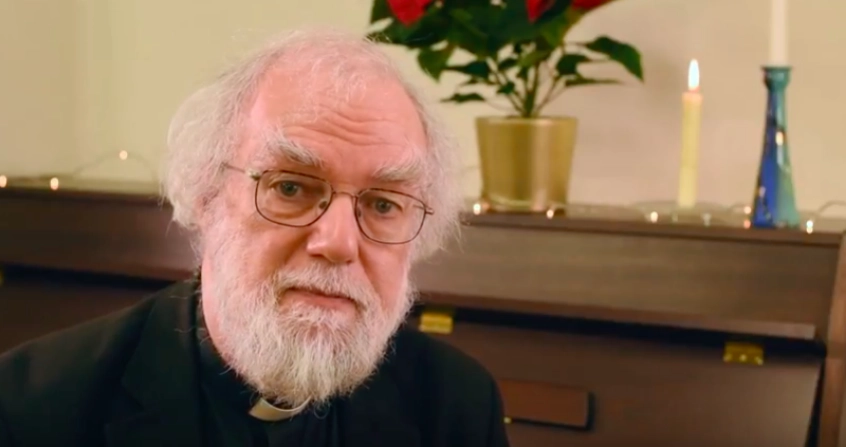
Former Archbishop of Canterbury Rowan Williams has faced criticism after suggesting that Reform UK leader Nigel Farage is using Christianity to “channel anti-Muslim feeling” in Britain.
In an interview with New Humanist magazine, Williams discussed the growing prominence of Christian language in nationalist and political movements, questioning the depth of Farage’s Christian convictions and suggesting that concerns about migration and Islam may be contributing to the political use of Christianity.
“I suspect really that Farage and others want to channel anti-Muslim feeling, and it helps to have ‘we’re a Christian society’ to fling back. It gives a sort of ballast,” he said.
Williams also questioned the appointment of Cambridge professor of philosophy of religion Dr James Orr as Reform UK’s head of policy, saying: “Although Nigel Farage thought it was worth getting a theologian on board for Reform UK, I don’t think he lies awake at night thinking about his soul. I may be doing the man an injustice, but I don’t believe he cares about profound theological questions.”
He argued that there was an “inevitable scepticism these days about some claims to religious conviction” and suggested Farage was seeking “a presentational strategy that allows him to be taken seriously outside England”.
The comments have prompted a strong response from Christian activist Fleur Elizabeth Meston, who told GB News that Williams’ assessment of Farage was “entirely false”.
“I think it is entirely false, and the fact that Farage has entrusted Zia Yusuf, a Muslim, in a prominent position within the Reform party just immediately puts to that any claims of Reform or Farage having an anti-Muslim agenda,” she said.
Meston accused Williams of “mischief-making” and being “divisive”, while arguing that his criticism failed to recognise the distinction between defending Britain’s Christian heritage and hostility towards Muslims.
She also questioned whether Williams had attempted to engage personally with Farage or other figures whose political views he disagrees with.
“If Rowan Williams doesn’t like the character – I know he mentioned Tommy Robinson as well as Farage because of their different beliefs – I wonder, has he ever tried to reach out to them as a prominent Christian in the UK and showed them the Gospel?” she said.
“I just think that the judgement is not his to give. I think it is unwise to be making public statements that you don’t believe that someone else is really a Christian.”
The debate comes as Christianity has become an increasingly visible part of Reform UK’s political language.
At Easter, Farage said that “the Christian values on which our country is built are something to be proud of”, while in May he spoke publicly about what he described as a “resurgence of Christianity” with the senior pastor of Bread of Life Community Church in his Clacton constituency.
Reform UK has also placed the restoration of Britain’s Christian heritage among its stated political objectives. Significantly, its home affairs spokesman Zia Yusuf is himself a Muslim. Yusuf has argued that mass immigration from what he described as “low-trust societies” has contributed to an erosion of Christian values, and has spoken against churches being converted into mosques.
The issue raises a more fundamental question for Christians about the relationship between faith, national identity and political power.
Christianity has undeniably played a formative role in Britain’s history, institutions, laws and culture, but the Christian faith also carries teachings that sit uneasily with political tribalism.
Jesus’ command to love one’s neighbour, his concern for the stranger and the biblical emphasis on welcoming outsiders mean that any political appeal to Christianity inevitably raises questions about how those principles are applied to immigration, asylum and religious minorities.
Equally, Christians are not required to abandon their cultural and religious heritage simply because questions surrounding immigration or national identity have become politically controversial.
Acknowledging Britain’s Christian history is not, in itself, evidence of hostility towards another faith.
For Christians, there is also a danger in allowing political arguments to become a substitute for the Gospel. The New Testament does not present Christianity primarily as a programme for national restoration, but as a call to repentance, faith in Christ and transformed lives.
As the political debate intensifies, Christians may therefore find themselves challenged from both sides: to defend the historical and cultural contribution of Christianity without turning faith into a weapon against minorities, while also resisting the idea that any expression of Christian identity must necessarily be motivated by prejudice.
The disagreement between Rowan Williams and his critics illustrates how contested this territory has become. At its heart lies a question that extends beyond Nigel Farage or Reform UK: what does it actually mean for Britain to describe itself as a Christian society, and what should that mean for the way Christians speak about their neighbours? Duncan Williams is outreach director for the Christian Free Press and has worked for Son Christian Media here in the UK and Recovery Network Radio in the United States. He is an ordained minister and a long-term member of Christians in Media. He provides content and syndicated news for regional publisher www.inyourarea.co.uk
Photo Courtesy :