Leader of Hindu nationalist group RSS denies ‘anti-Christian’ claims amid rising persecution

BY : Jon Brown, Christian Post Reporter
WASHINGTON — A leader of a prominent Hindu nationalist paramilitary organization in India that has been flagged by international religious freedom watchdogs denied claims that his group is anti-Christian earlier this week.
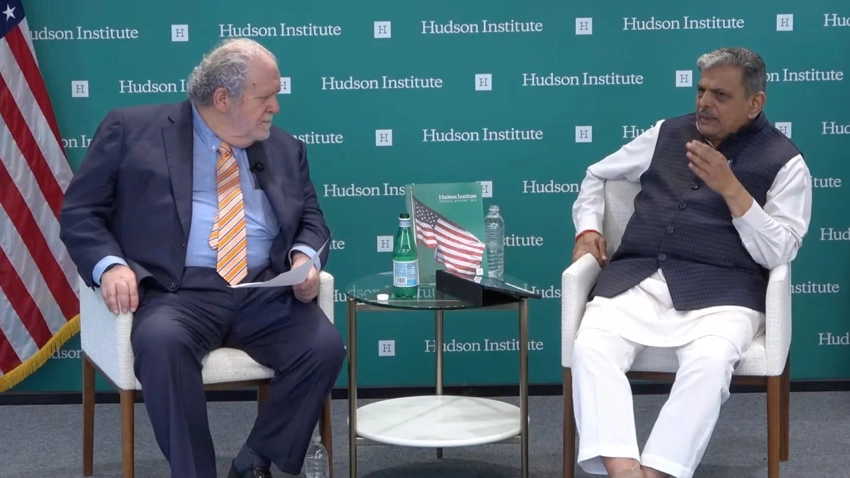
Dattatreya Hosabale, who has served as general secretary of the Rashtriya Swayamsevak Sangh (RSS) since 2021, said during an interview at the Hudson Institute on Thursday that such a characterization of RSS is one of many American misconceptions about India.
“The narrative that has built over decades — knowingly, unknowingly or as part of [an] agenda, whatever it is — is that RSS is Hindu supremacist, or that it is in any way anti-Christian, anti-minority, anti-development and woman, anti-modernization,” he said during a conversation with Hudson scholar Walter Russell Mead.
Founded in 1925 by Keshav Baliram Hedgewar, an Indian physician who was heavily influenced by the revolutionary Hindu nationalist Vinayak Damodar Savarkar, RSS is an influential volunteer organization that boasts more than 4 million members and holds more than 83,000 gatherings throughout India daily.
Though widely known for its social service and disaster relief efforts, RSS has long faced allegations from critics of seeking to suppress religious minorities while promoting Savarkar’s Hindutva ideology, the view that Hindu culture forms the core of Indian nationhood.
India’s ruling Bharatiya Janata Party (BJP), established in 1980, is considered the political wing of the RSS, and many top Indian leaders are long-time RSS members, including Indian Prime Minister Narendra Modi.
Modi, who served as the chief minister of the Indian state of Gujarat from 2001 to 2014, was banned from entering the U.S. in 2005 under the 1998 International Religious Freedom Act amid allegations of “severe violations of religious freedom” and complicity in large-scale anti-Muslim riots in 2002.
The ban was not lifted until Modi became prime minister in 2014, and he has since become a frequent visitor to the White House and addressed a joint session of Congress twice.
Dismissing the idea that RSS is an “Indian version of the Ku Klux Klan,” Hosabale claimed Thursday that supremacist ideology of any kind is antithetical to true Hinduism.
“The Hindu philosophy and Hindu culture doesn’t tolerate supremacism, because we see that the whole world is one family, and all are brothers and sisters, and there’s no question of supremacy there,” he said. “And we see the oneness in everybody, living and non-living things.”
“So when that is the basic philosophy of Hindus, the supremacist nature of Hindus cannot be there,” he claimed. “And also, in history, Hindus have never invaded any country. Hindus have never enslaved any people.”
“Hindus have nothing to apologize for,” he added.
Hosabale’s portrayal of RSS contradicts the assessment by the U.S. Commission on International Religious Freedom (USCIRF), which has drawn allegations of bias from the Indian government after recommending the U.S. designate India as a Country of Particular Concern for seven consecutive years.
In a report released last November, USCIRF characterized the Hindutva ideology of the BJP and RSS as a major source of systematic religious persecution against religious minorities in India, including Christians.
In its most recent annual report, USCIRF called on the U.S. government to impose targeted sanctions on RSS, claiming the organization is one of the entities responsible for “severe violations of religious freedom” in the country.
Persecution against Christians in India has steadily risen since Modi’s BJP assumed power at the federal level in 2014, with 2025 reportedly marking the most violence against them since Indian independence in 1947, according to data by the United Christian Forum.
The latest annual report by the Evangelical Fellowship of India’s Religious Liberty Commission documented nearly 750 incidents against Christians last year, including public beatings, church vandalism, service disruption, threats against worshipers or other forms of abuse.
Human rights lawyers and advocates have pinpointed the misuse of India’s increasingly strict state-level “anti-conversion” laws as a key factor in enabling such attacks. Last year, Pastor Jose Pappachan and his wife became the first Christians in India to be convicted and sentenced to prison under such legislation, prompting fears from Christian activists and lawyers that their case could set a precedent.
Some members of the Indian Parliament have also pushed back against a proposed amendment to the country’s foreign donations law, which prompted outrage from Christian leaders who said it would allow the government to seize the assets, funds and property of Christian organizations. A vote on the amendment was postponed earlier this month until July.
India ranked 12th globally on Open Doors’ World Watch List 2026, with the Christian persecution watchdog noting that much of the persecution against the roughly 72 million Christians in India comes from Hindu nationalists.
The organization noted that formerly Hindu believers bear the brunt of persecution in India, and face constant pressure to abandon Jesus Christ by returning to Hinduism.
In 2016, Open Doors reported that RSS stood accused by religious minorities of attempting to make India an exclusively Hindu nation, and that Christian leaders were suspicious of RSS proposals that year to create a Christian structure in the organization, fearing a potential “hidden agenda” to subvert Christianity.
Hosabale’s remarks this week came during the Hudson Institute’s “New India Conference,” an all-day event near the White House that focused on India’s rising geopolitical role, its economic transformation under Modi and the future of U.S.-India relations. Secretary of State Marco Rubio is slated to visit the country next month amid increased diplomatic strain.
The event at the Hudson Institute came the same day that President Donald Trump posted transcribed remarks to Truth Social by conservative podcaster Michael Savage, who called India a “hellhole” and accused Indians of abusing the U.S. immigration system. Delhi condemned such sentiments as “uninformed, inappropriate and in poor taste.”
Photo Courtesy :